
Photovoltaic panels on roof facing southwest.


Icynene foam insulation

JDH Construction Limited to seal the exterior walls and roof to create a controllable interior environment.
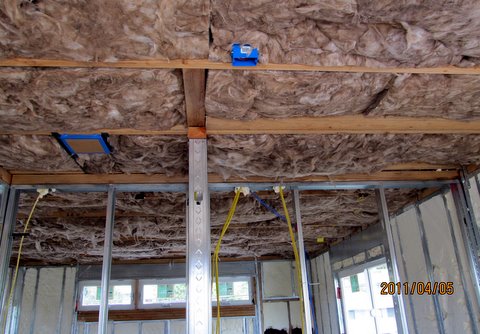
Ecobat Fiberglass Insulation


Engineered Wood Trusses

installed by Sunrise Construction Inc.
NHH Blessing

From left to right: Robert Armstrong, Armstrong Builders LLC, Council Member Tulsi Gabbard Tamayo, Council Member Stanley Chang, Lori Ann Ambrosewicz, Owner Daniel Ambrosewicz, Owner Senator Mike Gabbard. Michael Brant, Gentry Homes Ltd., Senator Pohai Ryan, Kahu Kelekona Bishaw.
LEADERSHIP
It is not often that leaders from what most would initially think represent different interests come together for a unified cause, setting aside those things that would traditionally divide them and focusing on initiatives that unite them. Three key entities and their respective leaders – The Building Industry Association of Hawaii (BIA), the Hawaiian Electric Company (HECO) and the Department of Business Economic Development and Tourism (DBEDT), have joined together to take sustainable living to a higher level. Their focus is to take their relentless passion and expertise and to help Hawaii lead in sustainable building and sustainable living. They will take their collective lessons learned to the national platform to reform policies and guidelines that have hindered progress toward this cause.
CONSTRUCTION INDUSTRY GREEN EDUCATION
Currently, there is a glass ceiling for contractors trying to get into sustainable, green building. This is especially true for smaller contractors, which is the primary target for the BIA. There is a perception that sustainable, green building is inefficient, cost prohibitive and too difficult. The New Hawaiian Home will serve as a learning tool for BIA contractors and prospective contractors to better understand green building concepts. An education curriculum will be developed over the course of the construction project and will be used in future educational opportunities the BIA engages in. In partnership with other building trade organizations, construction trade unions and major supply dealerships, the BIA will share best practices to lead the industry in sustainable, green building.
END USER EDUCATION
Most people don’t realize the easiest and most effective way to wean Hawaii off of its dependency on fossil fuel starts with the end user . . . the everyday citizen. If Hawaii reduces its energy use by 12%, the almost $1BILLION savings could be reinvested into our economy – just from simple lifestyle changes we COULD make as average citizens. HECO, has taken a leadership role to educate communities at-large that our journey off of fossil fuel starts in the mirror. The New Hawaiian Home is more than just a sustainable, green home; it transcends to a sustainable, green and still modern lifestyle. In addition to LEED Platinum and ANSI Silver National Green Building Standards, the New Hawaiian Home will incorporate acquaponics and composting systems, edible or usable landscaping, solar dryers (Hawaiian clothes line) and most importantly, developed in a way that assures that the years ahead result in the reduced carbon emission footprints that LEED and ANSI Standards expect.
Subscribe to:
Posts (Atom)